
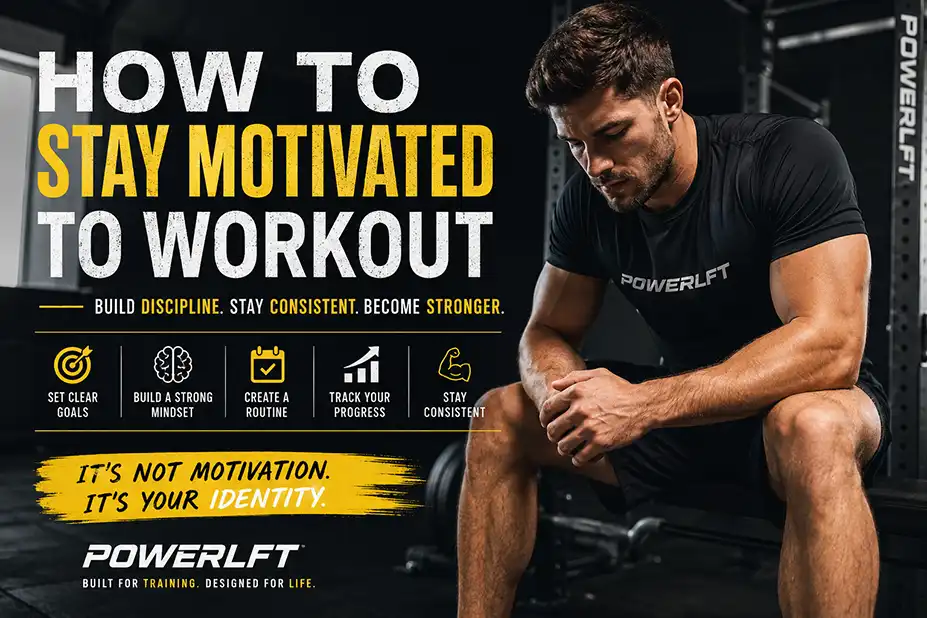
How to Stay Motivated to Workout: Build Discipline, Consistency, and a Stronger Fitness Mindset
Introduction
Learning How to Stay Motivated to Workout is one of the biggest challenges in fitness.
At the beginning, motivation feels easy.
You buy new gym clothes.
You create a workout plan.
You imagine your future body.
You feel ready to change.
Then real life happens.
Work gets busy.
You feel tired.
Progress slows down.
The scale does not move.
You miss one workout, then another.
Suddenly, fitness feels hard again.
Here is the truth: nobody feels motivated all the time.
Not beginners.
Not athletes.
Not bodybuilders.
Not personal trainers.
The people who succeed are not the ones who always feel motivated. They are the ones who learn how to train even when motivation is low.
That is where your fitness mindset matters.
In this guide, you will learn practical, science-backed, and realistic ways to improve your workout motivation, build discipline, and stay consistent with exercise long enough to see real results.
Table of Contents
- Key Takeaways
- Why Workout Motivation Comes and Goes
- How to Stay Motivated to Workout Long Term
- Motivation vs Discipline: What Actually Works?
- Set Fitness Goals That Keep You Moving
- Build a Workout Routine You Can Actually Follow
- Use Identity-Based Fitness Mindset
- Make Your Environment Work for You
- Track Progress Beyond the Scale
- How to Stay Motivated When You See No Results
- Common Motivation Mistakes
- Quick Motivation Checklist
- FAQ
- Conclusion
Key Takeaways
- Motivation is temporary. Discipline and systems create long-term results.
- The best workout plan is the one you can repeat consistently.
- Small wins build confidence and momentum.
- Your environment can make training easier or harder.
- Tracking strength, energy, mood, and consistency is better than focusing only on weight.
- A strong fitness mindset is built through action, not waiting to feel ready.
- Missing one workout is not failure. Quitting completely is the real problem.
Why Workout Motivation Comes and Goes
Motivation is emotional.
It changes based on your mood, energy, stress, sleep, progress, and environment.
Some days, you wake up ready to train.
Other days, even putting on your shoes feels difficult.
That does not mean you are lazy.
It means you are human.
Common Reasons Motivation Drops
Your fitness motivation can disappear when:
- You do not see results fast enough
- Your workout plan is too difficult
- You are training without a clear goal
- You are comparing yourself to others
- You are tired or stressed
- You are not sleeping enough
- You do not enjoy your workouts
- You rely only on motivation instead of habits
The Centers for Disease Control and Prevention explains that regular physical activity can support physical and mental health, but consistency is key to receiving long-term benefits. CDC
That is why motivation alone is not enough.
You need a system that keeps you moving when motivation fades.
Pro Tip: Do not build your fitness journey around perfect days. Build it around normal days, busy days, tired days, and stressful days.
How to Stay Motivated to Workout Long Term
The best way to understand How to Stay Motivated to Workout is to stop asking, “How do I feel motivated every day?”
A better question is:
“How can I make working out easier to repeat?”
Long-term motivation comes from:
- Clear goals
- Visible progress
- Enjoyable workouts
- Simple routines
- Supportive environment
- A strong identity
- Consistent small wins
The Motivation Formula
| Element | Why It Matters |
|---|---|
| Goal | Gives direction |
| Routine | Reduces decision fatigue |
| Progress | Builds confidence |
| Enjoyment | Makes workouts sustainable |
| Environment | Makes action easier |
| Identity | Helps you become the type of person who trains |
When these elements work together, you no longer depend on random bursts of motivation.
You build a lifestyle.
POWERLFT was built for that kind of lifestyle: training hard, living actively, and showing up consistently. Wearing comfortable premium activewear can help you feel ready to train and move with confidence inside and outside the gym.
Motivation vs Discipline: What Actually Works?
Motivation gets you started.
Discipline keeps you going.
But discipline does not mean forcing yourself through misery every day.
Real discipline means creating habits and standards that make your goals easier to follow.
Motivation
Motivation sounds like:
- “I feel ready today.”
- “I want to train.”
- “I am excited to start.”
- “I watched a fitness video and feel inspired.”
Motivation is useful.
But it is unstable.
Discipline
Discipline sounds like:
- “I train because this is who I am.”
- “I will do a shorter workout today instead of skipping.”
- “I do not need to feel perfect to show up.”
- “I keep promises to myself.”
Discipline is built through repeated action.
Motivation vs Discipline Table
| Motivation | Discipline |
|---|---|
| Emotional | Behavioral |
| Comes and goes | Can be trained |
| Good for starting | Essential for consistency |
| Depends on mood | Depends on standards |
| Feels exciting | Creates results |
The goal is not to eliminate motivation.
The goal is to use motivation when it appears and rely on discipline when it disappears.
Set Fitness Goals That Keep You Moving
Many people lose motivation because their goals are too vague.
They say:
“I want to get fit.”
But what does that mean?
Lose 20 pounds?
Build muscle?
Run faster?
Lift heavier?
Feel better?
Train three times per week?
A vague goal creates vague action.
A clear goal creates direction.
Better Fitness Goal Examples
Instead of:
“I want to get in shape.”
Say:
- “I will train 4 days per week for the next 8 weeks.”
- “I will add 20 pounds to my squat in 12 weeks.”
- “I will walk 8,000 steps per day.”
- “I will eat a high-protein breakfast five days per week.”
- “I will complete my first 10 push-ups without stopping.”
Use Outcome Goals and Process Goals
There are two types of goals.
Outcome Goals
These are results you want.
Examples:
- Lose 15 pounds
- Build muscle
- Bench press 225 pounds
- Get leaner
- Improve endurance
Process Goals
These are actions you control.
Examples:
- Train 4 times per week
- Sleep 7 hours
- Eat protein at every meal
- Walk daily
- Stretch after workouts
Outcome goals give direction.
Process goals create results.
Coach’s Tip: If motivation is low, focus on process goals. You may not control how fast your body changes, but you can control whether you show up today.
Build a Workout Routine You Can Actually Follow
A perfect workout plan is useless if you cannot follow it.
Many beginners fail because they start too aggressively.
They go from zero training to six intense workouts per week.
That may work for one week.
Then soreness, fatigue, stress, and life get in the way.
A better strategy is to start with a routine you can repeat.
Beginner-Friendly Workout Schedule
| Day | Workout |
|---|---|
| Monday | Full-body strength |
| Tuesday | Walk or mobility |
| Wednesday | Full-body strength |
| Thursday | Rest |
| Friday | Full-body strength |
| Saturday | Walk, sport, or light cardio |
| Sunday | Rest |
Intermediate Workout Schedule
| Day | Workout |
|---|---|
| Monday | Upper body |
| Tuesday | Lower body |
| Wednesday | Active recovery |
| Thursday | Push workout |
| Friday | Pull workout |
| Saturday | Legs or conditioning |
| Sunday | Rest |
Keep the First Step Easy
The hardest part is often starting.
Use the “10-minute rule.”
Tell yourself:
“I only need to train for 10 minutes.”
Most of the time, once you start, you continue.
And even if you only do 10 minutes, you still kept the habit alive.
That matters.
Use Identity-Based Fitness Mindset
A strong fitness mindset starts with identity.
Instead of saying:
“I am trying to work out.”
Say:
“I am someone who trains.”
That small shift matters.
Your identity influences your behavior.
If you believe fitness is something you temporarily do, you will quit when life gets hard.
If you believe fitness is part of who you are, you will find a way to keep going.
Identity-Based Examples
| Old Mindset | Stronger Mindset |
|---|---|
| I need to lose weight | I am becoming a healthier person |
| I have to work out | I get to train my body |
| I missed a workout, I failed | I missed one day, now I get back |
| I am not disciplined | I build discipline through action |
| I hate cardio | I train my heart and endurance |
Ask Yourself This
Before skipping a workout, ask:
“What would the stronger version of me do right now?”
Not the perfect version.
Not the extreme version.
The stronger version.
Maybe that person does a full workout.
Maybe they do 20 minutes.
Maybe they go for a walk.
But they do not quit completely.
Make Your Environment Work for You
Your environment affects your behavior more than you think.
If your gym clothes are buried in a drawer, your schedule is unclear, and your phone distracts you, training becomes harder.
If your shoes are ready, your workout is planned, and your gym bag is packed, training becomes easier.
Simple Environment Upgrades
Try these:
- Prepare your gym clothes the night before
- Keep your water bottle visible
- Pack your gym bag in advance
- Put workouts on your calendar
- Follow fitness accounts that inspire action
- Remove distractions before training
- Train at the same time each day
- Choose a gym close to home or work
Your environment should reduce friction.
The easier it is to start, the more likely you are to continue.
Choosing reliable gym clothing that feels good during training and looks clean outside the gym can also help reinforce your training identity. When your gear is ready, you are one step closer to showing up.
Track Progress Beyond the Scale
Many people lose motivation because they only track body weight.
The scale can be useful, but it does not tell the full story.
Your weight can change because of:
- Water retention
- Sodium intake
- Carb intake
- Hormones
- Sleep
- Stress
- Digestion
- Muscle gain
If you rely only on the scale, you may miss real progress.
Better Ways to Track Fitness Progress
Track:
- Strength numbers
- Workout consistency
- Energy levels
- Sleep quality
- Waist measurement
- Progress photos
- Resting heart rate
- Daily steps
- Mood
- Endurance
- How clothes fit
Progress Tracking Table
| What to Track | Why It Matters |
|---|---|
| Workouts completed | Measures consistency |
| Strength numbers | Shows performance progress |
| Body measurements | Shows physical change |
| Photos | Shows visual transformation |
| Energy | Shows lifestyle improvement |
| Sleep | Supports recovery and discipline |
| Steps | Helps daily activity |
Harvard Health notes that exercise can support mood and mental well-being, which is another reason to track more than appearance-based results. Harvard Health
Progress is not always visible immediately.
Sometimes, progress is having more energy, better sleep, improved confidence, or stronger discipline.
How to Stay Motivated When You See No Results
This is where most people quit.
They train for two weeks.
They look in the mirror.
They do not see a dramatic transformation.
Then they think:
“This is not working.”
But fitness does not work like instant delivery.
Your body needs time.
What to Do When Results Feel Slow
1. Review Your Consistency
Ask:
- Did I train regularly?
- Did I eat enough protein?
- Did I sleep enough?
- Did I stay active outside the gym?
- Did I follow the plan long enough?
Be honest, not emotional.
2. Look for Non-Scale Wins
You may be improving even if the mirror has not changed much.
Signs of progress:
- You lift more weight
- You feel less tired
- You recover faster
- You sleep better
- You walk more
- You have better posture
- Your clothes fit differently
- You feel more confident
3. Adjust, Do Not Quit
If something is not working, adjust the plan.
Do not abandon the goal.
Maybe you need:
- More protein
- Better sleep
- More steps
- Fewer calories
- More recovery
- A simpler routine
- Better training intensity
4. Stop Comparing Your Chapter 1 to Someone’s Chapter 20
Social media makes it easy to compare.
But you do not see someone else’s years of training, diet, genetics, lighting, editing, or lifestyle.
Focus on your own reps.
Your own meals.
Your own sleep.
Your own progress.
Use Small Wins to Build Workout Motivation
Confidence comes from keeping promises to yourself.
Every completed workout is a vote for your new identity.
Small wins matter because they create momentum.
Examples of Small Fitness Wins
- Showing up to the gym
- Completing your warm-up
- Drinking enough water
- Eating a protein-rich meal
- Walking 20 minutes
- Adding 5 pounds to a lift
- Sleeping 30 minutes earlier
- Stretching for 5 minutes
- Choosing a healthier meal
Small wins compound.
You do not need to win the whole year today.
You need to win the next action.
Pro Tip: On low-motivation days, lower the intensity but keep the habit. A light workout is better than completely breaking the routine.
Build a Workout Routine Around Enjoyment
You do not have to love every second of training.
But you should find a style of exercise you can tolerate and repeat.
If you hate your entire routine, consistency becomes harder.
Fitness Options That Work
You can build a strong body with:
- Weight training
- Calisthenics
- Running
- Cycling
- Swimming
- Boxing
- Hiking
- Sports
- Group classes
- Functional training
- Walking plus strength training
The best workout is not the trendiest one.
It is the one you can repeat with effort and progression.
Ask Yourself
- Do I enjoy this style of training?
- Can I see myself doing this for months?
- Does it fit my schedule?
- Does it match my goal?
- Am I recovering well?
- Do I feel better after doing it?
If the answer is no, adjust the plan.
How Clothing Can Support Your Fitness Mindset
This may seem simple, but what you wear can affect how ready you feel.
When your training clothes fit well, move well, and make you feel confident, it can become easier to step into the mindset of training.
You are not just putting on a shirt.
You are preparing for action.
That is why POWERLFT creates performance clothing for people who train hard and live actively.
The goal is not to look like someone else.
The goal is to show up as the strongest version of yourself.
Built for Training. Designed for Life.
Common Motivation Mistakes
Mistake 1: Waiting to Feel Ready
You will not always feel ready.
Start anyway.
Action often creates motivation.
Mistake 2: Going Too Hard Too Soon
Extreme plans usually fail.
Start with a routine you can repeat.
Consistency beats intensity when intensity makes you quit.
Mistake 3: Comparing Yourself to Others
Comparison steals focus.
Use others for inspiration, not self-punishment.
Mistake 4: Only Tracking Weight
The scale is one tool.
It is not the whole story.
Track strength, consistency, energy, and confidence too.
Mistake 5: Thinking One Bad Day Ruins Everything
One missed workout does not ruin your progress.
Two imperfect meals do not destroy your body.
The key is to return quickly.
Mistake 6: Training Without Recovery
Motivation drops when your body is exhausted.
If you are always tired, sore, and weak, you may need better recovery.
Read the POWERLFT guide on How to Recover Faster After a Workout to build smarter recovery habits.
Mistake 7: Not Eating for Your Goal
Your nutrition affects motivation.
If you under-eat, you may feel weak.
If you eat randomly, progress may slow.
For practical meal ideas, check out the guide to the Best Post Workout Meal.
Quick Motivation Checklist
Use this checklist when you do not feel like working out.
Before You Skip a Workout
Ask yourself:
- Did I sleep badly or am I just avoiding discomfort?
- Can I do a shorter workout?
- Can I train a different muscle group?
- Can I walk instead?
- Have I eaten enough today?
- Will I feel better after moving?
- What promise did I make to myself?
The 15-Minute Reset
When motivation is low:
- Put on your workout clothes
- Drink water
- Play one motivating song
- Do a 5-minute warm-up
- Train for 10 minutes
- Decide after that
Most of the time, starting is the hardest part.
Weekly Consistency Checklist
Aim to complete:
- 3–5 workouts
- 7,000–10,000 steps most days
- Protein at each meal
- 7–9 hours of sleep when possible
- 1–2 rest or active recovery days
- Progress tracking once per week
Quick Summary
If you want to know How to Stay Motivated to Workout, remember this:
Motivation is helpful, but it is not enough.
To stay consistent, you need:
- Clear goals
- A realistic workout routine
- Small daily wins
- A strong fitness mindset
- An environment that supports training
- Progress tracking beyond the scale
- Discipline built through action
- Recovery habits that keep you energized
You will not feel motivated every day.
But you can become the type of person who shows up anyway.
That is where real transformation begins.
FAQ
1. How do I stay motivated to workout every day?
Do not depend only on motivation.
Build a routine, set clear goals, prepare your gym clothes, track progress, and make workouts easier to start.
On low-energy days, do a shorter workout instead of skipping completely.
2. Why do I lose motivation to exercise?
You may lose motivation because your plan is too hard, results are slow, your goals are unclear, or you are relying only on emotion.
Poor sleep, stress, and lack of recovery can also reduce workout motivation.
3. Is discipline more important than motivation?
Yes, for long-term fitness.
Motivation helps you start, but discipline helps you continue when motivation fades.
The best approach is to use motivation when it appears and rely on habits when it does not.
4. What should I do when I do not feel like going to the gym?
Use the 10-minute rule.
Put on your workout clothes, warm up, and train for 10 minutes.
If you still feel terrible, do a lighter session or active recovery.
Keeping the habit alive matters.
5. How long does it take to build a workout habit?
It depends on the person and routine.
For many people, it takes several weeks to months to make exercise feel automatic.
The key is to start with a realistic schedule and repeat it consistently.
6. How can beginners stay consistent with exercise?
Beginners should start small.
Three workouts per week is enough for many people.
Focus on learning proper form, building confidence, and creating a routine before increasing intensity.
7. Can workout clothes really improve motivation?
Workout clothes will not replace discipline, but they can help you feel prepared and confident.
When your gear is comfortable and ready, it removes one barrier to training.
8. What is the best workout motivation tip?
The best tip is to stop waiting for motivation.
Take action first.
Even a short workout can build momentum and reinforce your identity as someone who trains.
Conclusion
Learning How to Stay Motivated to Workout is not about finding endless inspiration.
It is about building a system that helps you keep going when inspiration disappears.
Motivation starts the journey.
Discipline continues it.
Consistency transforms you.
Some days you will feel strong.
Some days you will feel tired.
Some days you will only do the minimum.
But every time you show up, you build trust with yourself.
That trust becomes confidence.
That confidence becomes identity.
And that identity becomes a lifestyle.
Build the Mindset. Live the Lifestyle.
Your strongest version is built one decision at a time.
Train with purpose, stay consistent, and wear apparel that supports your journey from the gym to everyday life.
Explore POWERLFT workout apparel and activewear designed for performance, confidence, and daily movement.
POWERLFT
Built for Training. Designed for Life.